Life of the White-Footed Fox in the Desert: Complete Guide
The white-footed fox (Vulpes vulpes pusilla), also known as the desert fox, is a small Asiatic subspecies of red fox that occurs throughout most of the northwestern Indian subcontinent, Pakistan’s desert districts from Rawalpindi to Rajasthan and Kutch in India, Baluchistan, southern Iran, and Iraq. It is mostly found on sand-hills or in the broad sandy beds of semi-dry rivers, and only very rarely in fields, and then in the vicinity of sandy tracts.
Read More About: Animals, itreseted Stories
Desert Habitat
- Lives in hot desert areas with dunes and dry land
- Prefers open sandy places for easy movement and hunting
- Very little water and extreme day–night temperatures
- Lives in burrows to stay safe from the heat during the day
- Usually found far from human settlements for safety
Food and Diet
Foxes are omnivores and eat a wide variety of plants and animals, depending on the season. Small birds and mammals are consumed, including mice, voles, rats, rabbits, and bird eggs. Foxes also eat insects, snakes, carrion, berries, apples, corn, seeds, and nuts. Foxes are primarily nocturnal, including hunting during dawn and dusk, but foxes are occasionally seen out during the day, particularly during the spring/summer when rearing pups.
Hunting Skills
- This fox is a very clever and silent hunter in the desert environment.
- It carefully listens and smells to detect small movements under the sand or bushes.
- It uses quick speed and sharp reflexes to catch prey in a matter of seconds.
- The fox often hunts alone, making it more efficient and focused during the search.
- Its hunting strategy depends on patience, silence, and sudden, fast attacks.
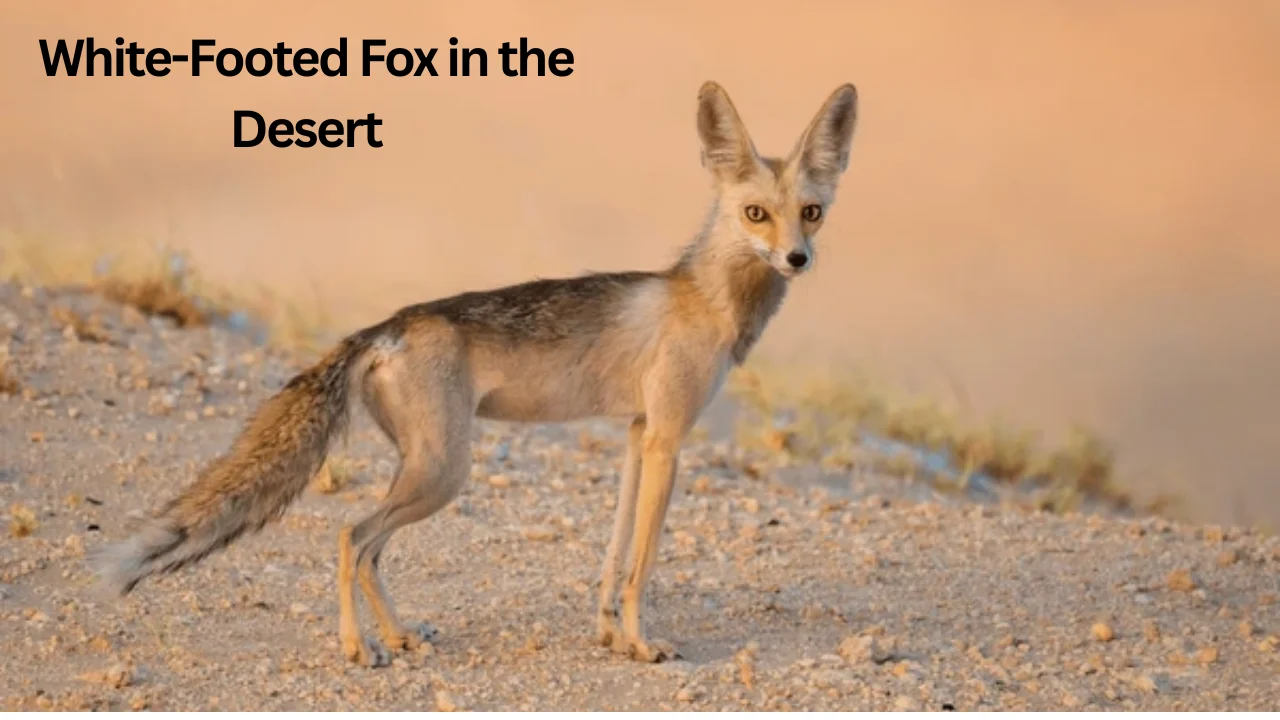
Daily Life in the Desert
- During the daytime, the fox stays inside burrows or shaded areas to avoid extreme heat.
- The desert fox is active at night when the temperature is cooler and goes to work easily.
- Most of its time is spent searching for food and searching for its place where they live.
- It also marks its area to protect it from other animals.
- It’s a very importent parts of the desert white-footed fox resting and alert every time.
Survival Adaptations
Foxes can become prey to coyotes, so you usually won’t find foxes in areas where coyotes are common. Other threats include exposure to rat poison since foxes are exceptional rodent control. Humans are also a mortality source, through hunting and trapping, or vehicle collisions.
Family and Cubs
- The white-footed fox lives in small family groups, usually led by a mother.
- The mother takes care of the cubs and keeps them safe inside a den.
- Cubs depend on their mother for food and protection in early life.
- As they grow, they are slowly taught hunting and survival skills.
- Family bonding is important for their survival in harsh desert conditions.
Behaviour and Nature
- This fox is shy, alert, and mostly active at night.
- It avoids humans and large animals whenever possible for safety.
- It communicates using sounds, body movements, and scent marking.
- It is very intelligent and quickly adapts to changes in its environment.
- Its behavior helps it survive in dangerous and unpredictable desert life.
Dangers in the Desert
The desert foxes are not dangrous for the human. The white-footed fox is naturally afraid of humans and prefers to stay away from them. The desert fox attacks humans in this case when they are rabid, when they are captured and handled. Even then, a fox’s natural tendency is to flee rather than fight.
Protection and Conservation
- Protecting desert habitats is important for the fox’s survival.
- Conservation laws help reduce hunting and protect its home.
- The awareness programs can give the easily education related to the importance of wildlife.
- National parks give safe homes to these desert animals.
- Conservation efforts help maintain balance in the desert ecosystem.
Should I be worried if I see a fox?
If a fox doesn’t appear scared of you, they probably learned to associate people with food (likely because someone has been feeding them) and may exhibit boldness or even approach you. These foxes are not dangerous and can easily be scared away by making loud noises such as yelling or blowing whistles, dousing them with water from houses or squirt guns, or throwing objects such as tennis balls toward them.
What should I do if I’m bitten by a fox?
Thoroughly wash the wound with soap and water and seek immediate medical attention. Prompt medical care will prevent a rabies infection. Be sure to report the bite to your local animal control agency, police department, or health department.
Living with Wildlife
How to Prevent or Resolve Conflicts with Foxes
Reasearch show the humans create the problem of giving food and shelter to animals without any reason. Preventing or removing access to these attractants is the first essential step to resolving a wildlife problem. This includes eliminating access to shelter, being smart about garbage, planting native plants to attract birds rather than using bird seed, protecting poultry and livestock, and being a responsible pet owner.
Conclusion
The white-footed fox is a smart desert animal that survives using its strong senses and hunting skills. It is very important role in the environment they paly a vital role to maintan the desert ecosystem by controlling the small animal population. The fox, even with challenges, survives easily in the environment. People should protect these habitats in the future. In this case, the desert white-footed fox population may decline to a very low level in the future.
FAQ’s
What is a white-footed fox?
It’s a small desert Fox they live in sandy areas, who areas or very hot.
Where does the white-footed fox live?
These foxes live in the deserts of Pakistan and related regions.
What does the white-footed fox eat?
The white-footed fox eats these things. Small birds and mammals are consumed, including mice, voles, rats, rabbits, and bird eggs.
Is the white-footed fox dangerous to humans?
No, white-footed fox or not, dangerous for humans.