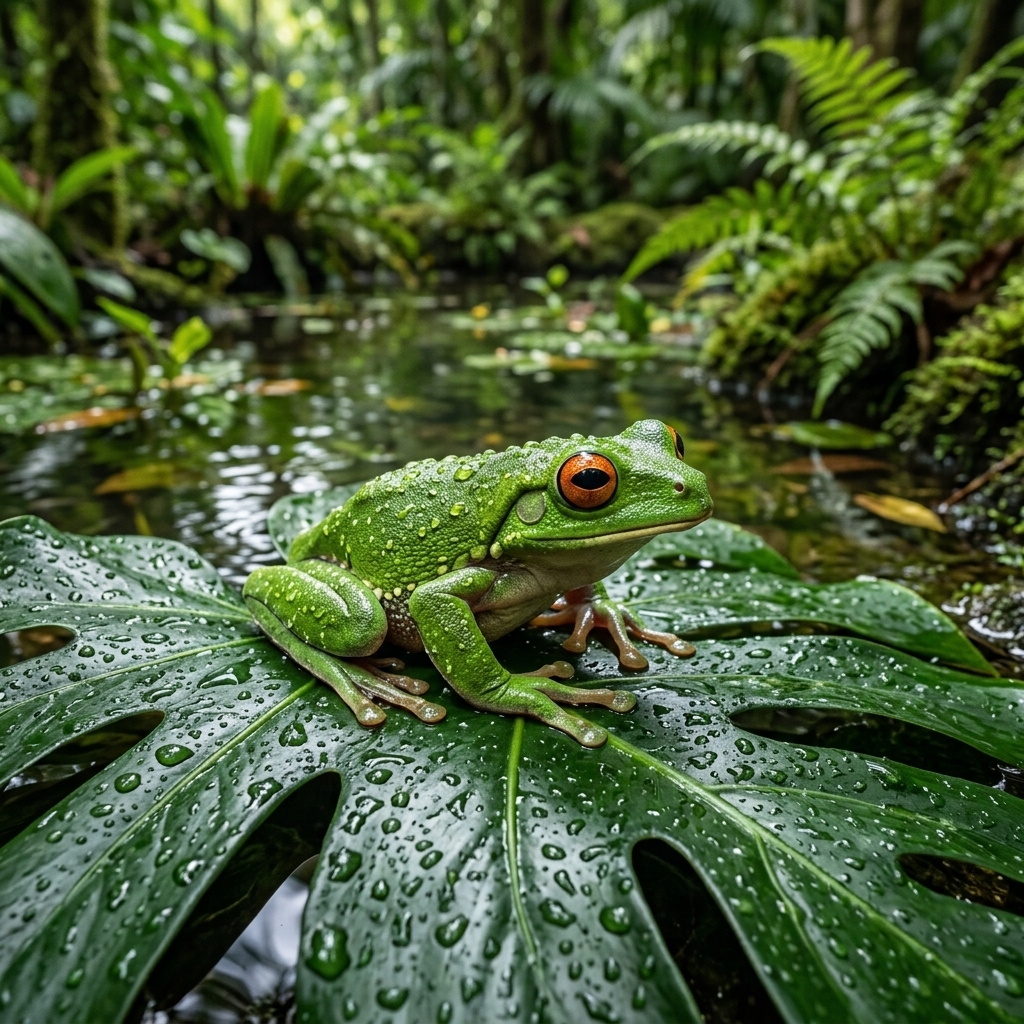
Frog in Pakistan: Complete Detail
Floating between worlds, the frog thrives where damp meets dry ground. Known more for leaps than walks, it moves fast through muddy edges. A rough call often breaks the evening quiet – no song, just sound. Skin stays slick even when not swimming. Life splits time: part beneath waves, part under open sky. Besides ponds, you might spot frogs near rivers across Pakistan. Fields after rain often host these small jumpers, too. Forest edges become lively with them when wet seasons arrive. Their presence is closely linked to insect numbers around water. Instead of vanishing quickly, they stick around where bugs thrive. By eating loads of pests, they shape what lives nearby. Balance in nature shifts a bit thanks to their appetite. Without them, some creatures would multiply beyond usual limits.
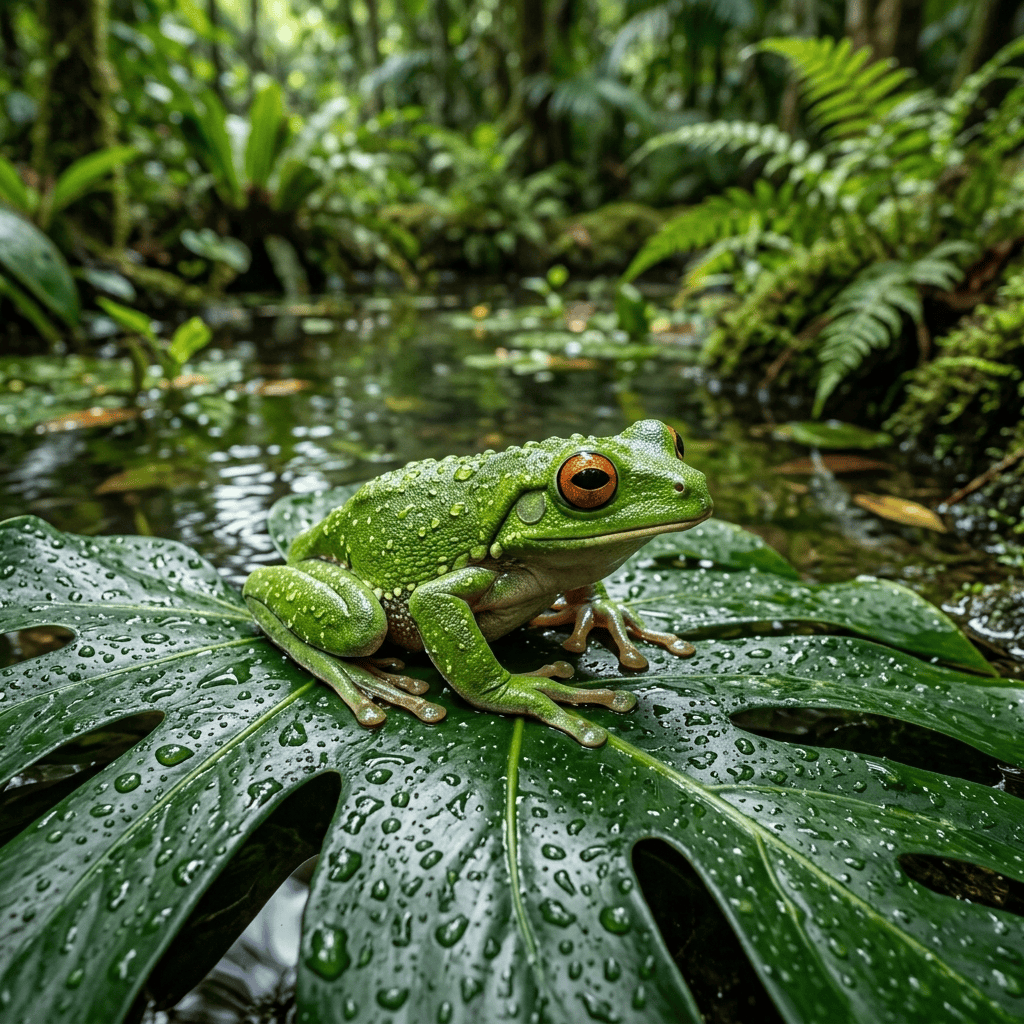
The Frog – A Small Amphibian Animal
Jumping far comes naturally to frogs because of their powerful hind limbs. A frog’s body feels soft, its rear legs stretch out long, and its eyes sit broad and wide on the head. Active at night, many of these creatures hide by day, quiet until darkness returns. Movement is swift, thanks to those muscular legs built for leaping across wet terrain. Frogs settle wherever there’s water nearby. Cool, damp spots work best since their skin stays healthy when wet.
Physical Traits and Distinctive Characteristics
The frog has many special physical features:
- Soft and smooth skin
- Long and powerful back legs
- Large round eyes
- Sticky tongue for catching insects
- Webbed feet for swimming
- Green, brown, or gray body color
- Strong jumping ability
Frogs usually stay tiny, yet a few kinds grow bigger where they live shapes them. Size shifts when surroundings change, what grows.
Habitat and Distribution in Pakistan
The Frog lives in many areas of Pakistan. People can find frogs in:
- Ponds
- Rivers
- Lakes
- Rice fields
- Wet forests
- Gardens and farms
Besides Lahore, frogs show up in Karachi when the rains arrive. Rural spots see them too once the skies open. Though city lights glow, damp fields welcome these jumpers just after the monsoon hits.
Behavior and Adaptability
Hidden among blades of wet green stuff, frogs keep still. Safety comes from silence when danger moves nearby. Faster than most expect, frogs settle into damp places. Not just noise, their croaks carry messages – calling mates when it’s time to breed.
Diet and Feeding Patterns
Frogs usually stick to meat. Insects land on their menu – so do tiny animals now and then.
Food Sources
Frogs eat:
- Insects
- Mosquitoes
- Flies
- Worms
- Small spiders
- Small fish
- Tiny water animals
A frog snaps its meal with a slick, sudden tongue flip. Fast movement helps it grab insects before they flee. Sticky saliva grips prey tight during the strike. Quick reflexes make the difference every single time.
Feeding Behavior
When darkness comes, frogs begin looking for food. Motionless, they sit, waiting until bugs wander near. A sudden snap of their wet tongue grabs whatever gets too close.
Living With People
Besides ponds, frogs stick close to yards where bugs swarm. Because they snack on pests – say, gnats or midges – folks benefit quietly. Frogs sit at the center of scientific curiosity when it comes to reading nature’s condition. Their presence whispers clues about how ecosystems truly fare.
Reproduction and Life Cycle
Frogs grow in a way that surprises most people when they first learn about it. Their journey from egg to adult takes turns you might not expect.
Breeding Season
Frogs usually mate when the rains come. To bring in a female, males call out loudly.
Eggs and Tadpoles
Floating in ponds, female frogs release clusters of eggs. From these come tiny tadpoles, slipping free when shells split open. Water holds them close while limbs push out and breathing shifts inside. Little by little, tails shrink as bodies twist toward land. One day, what once swam now hops under the sun.
Cultural and Ecological Importance
Cultural Importance
Frogs hop through fairy tales, slide into Saturday morning shows, then leap again in biology class. Across villages and cities, these jumpers show up in songs, myths, on flags – everywhere.
Ecological Importance
Frogs keep things steady in the wild by eating lots of insects. Birds, snakes, and various creatures rely on them to survive.
Conclusion
Floating between water and land, frogs might be tiny yet hold big roles in nature. Because of their presence, insect numbers stay balanced across many environments. A shift from egg to jumper happens fast, showing how change drives survival. Leaping high comes naturally, thanks to legs built for sudden motion. Living both ways – wet and dry – opens paths few creatures can follow.
FAQ’s
What is a frog?
A frog is a small amphibian animal that can live on land and in water.
Where do frogs live in Pakistan?
Frogs live near ponds, rivers, lakes, fields, and wet areas in Pakistan.
What do frogs eat?
Frogs eat insects, mosquitoes, worms, flies, and other small creatures.
What is a baby frog called?
A baby frog is called a tadpole.