Black Cobra(Naja Naja) Rescued from a water
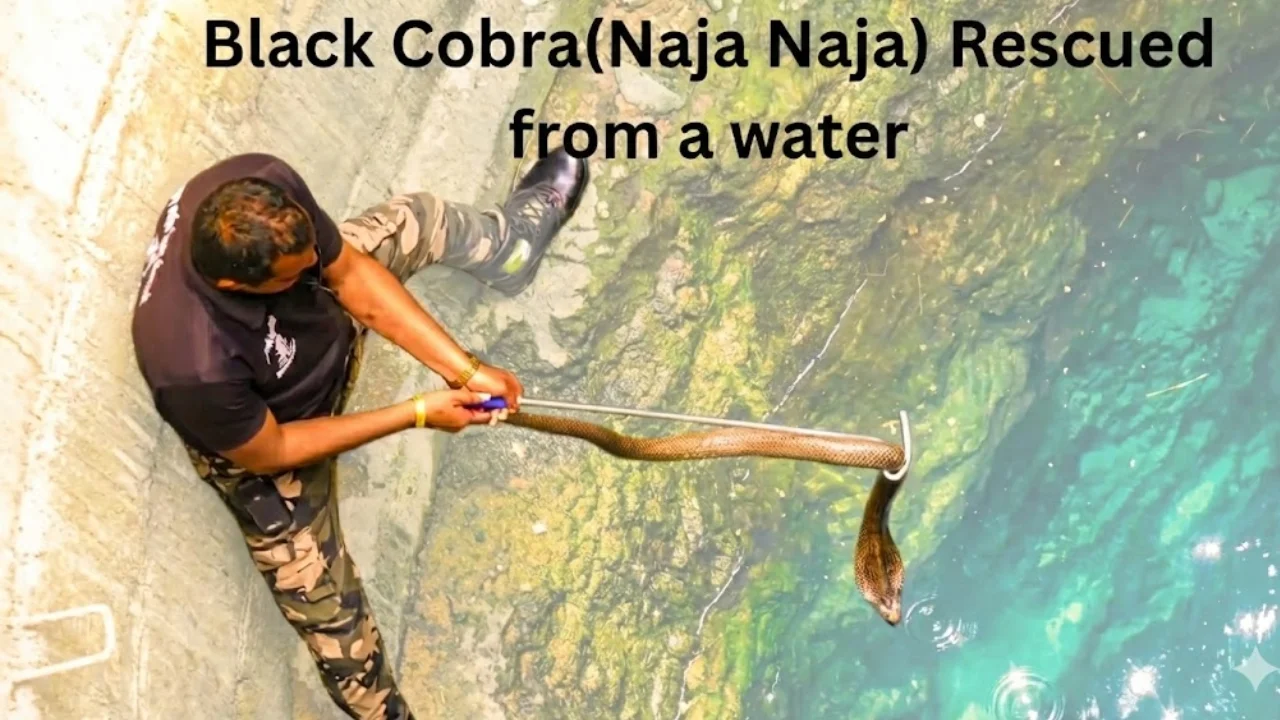
A black cobra (Naja Naja), one of the most feared yet fascinating snakes, was recently rescued from a water well. Three cobras had accidentally fallen into a deep pit inside the well, which was around 30 to 40 feet deep, making it extremely difficult for them to escape on their own. Rescued team reach timely in time and safely rescued the three snakes in the well.
Read More about Black Cobra Snake
The Rescue Operation
Abdulrahman successfully rescued a black cobra from a very deep well. The depth of the well made the rescue challenging, and Abdulrahman had to carefully plan the operation. He arranged ropes and other safety measures to ensure the snake could be brought out safely. After careful efforts, the cobra was safely rescued from the well.
Most common rescue scenarios
Rural Areas
|
Rural Area Situation |
Risk or Problem |
Simple Explanation |
| Farmlands & plantations | Snakes create the disturbance during working hours |
Snakes may be in crops or grass, especially during harvest time. |
|
Firewood and grain storage |
Higher chance of snake encounters |
Snakes may hide near stored wood or grain because these places give shelter and attract rats. |
|
Village houses |
Houses attract snakes |
Homes with many holes, shelter, and lots of rats can attract snakes. |
|
Walking barefoot |
High risk of snakebite |
Bare feet are not protected and can easily be bitten. |
| No torch at night |
Hard to see snakes in the dark |
Snakes blend with their surroundings in daytime and are almost impossible to see at night without light. |
Urban Areas Rescued from water
| Situation / Place | Risk or Problem | Simple Explanation |
|---|---|---|
| Encroachment (building in snake areas) | More human–snake conflicts | When people build homes where snakes live, humans and snakes come into contact more often. |
| Parks | Snakes can live in small green spaces | Snakes can adapt and survive even in small parks and green areas. |
| Backyard gardens | Snakes may use gardens as shelter | In crowded cities, gardens may be one of the few natural places left for snakes to hide. |
| Storage areas | Good hiding places for snakes | Storerooms, junk, and scrap materials provide safe shelter for snakes. |
| Poor waste management | Attracts snakes indirectly | Garbage attracts rats, and snakes come to eat the rats. |
Safety Measures Rescued from a water
Safety was the top priority. Villagers were instructed to keep a safe distance, while the rescue team wore protective gear. Proper handling techniques were used to avoid any bites or injuries, ensuring both humans and the cobra stayed safe throughout the operation.
Safety Instructions for the Caller During a Snake Rescue
When someone calls for snake rescue, the rescuer should first ask:
- Is the snake still there?
- Where exactly is it?
- Description of the snake – its colour and approximate length.
Instructions to Give the Caller:
- Do not go near the snake – Any person should try to catch the snake
- Keep people away – Any people who do not crowd around the snakes
- Watch the snake from a safe distance – only keep an eye on it until the rescuer arrives.
- Inform the rescuer immediately if the snake moves to any area before reaching the rescue help
Wildlife Awareness and Education
Every student should achieve wildlife education. Snakes usually avoid humans and do not chase them. Some elders believe snakes chase people. This is not true. Government decide the every people achive the wild life education. So children mindes is open, curious, and interested in nature and animals.
One of the best ways to teach all young students about the wild life its a very interesting session for students. Studen5s discuse about the animal wildlife with their parents and teachers in this dicustion students lkearn the animals life. Wildlife presentations at schools let children see and learn about friendly native Pakistani animals, their habitats, and how to protect them. These sesion is creat the exitment in education and leave a lasting positive impression on students.
All children can learn about the different friendly animals aftyer close up. They can even touch some of them safely. Such wildlife education helps kindergarten students understand the animals’ habitats and daily lives, while also teaching them the importance of protecting animals. This study method is enjoyable and exciting for students, so students give positive comments.
Community education – an important role of a snake rescuer
A rescuer in action captivates onlookers with his or her skills and technique. As a result, they are in a powerful position that can be used to instil positive feelings toward snakes. The rescuer, hence, should be well-informed before taking on the role of conservationist.
A few points that can be used as part of rescue education:
- Biology of the snake with emphasis on harmlessness in case of non-venomous snakes.
- Importance in nature and direct relevance to us humans, giving the example of rodents’ impact on agricultural produce.
- Tips on how to minimise snake encounters.
- Tips on snakebite management and precautionary measures.
- Clarifying common myths. − Issues regarding translocation.
Conservation Impact
Rescuing snakes like the black cobra contributes to wildlife conservation efforts. Snakes control the rodents and other related things, for example, insects. Snakes play a importent role in the ecosystem. Each rescue system not only saves one person, but also saves the animals, and many times saves the overall ecosystem.
Release into the Wild
After thoroughly checking the black cobra, transfer the natural habitat away from the humans sattlement. It was released gently into the wild, allowing it to return to its natural environment without posing a threat to anyone.
Handling tips for venomous and non-venomous snakes
- Your safety – avoid getting bitten.
- Snake’s safety – avoid hurting or stressing it.
Even non-venomous snakes can be easily scared or injured. Proper care is very important.
Key Tips:
-
- Stay calm – snakes sense sudden movements or fear.
- Support the snake’s body – make it feel safe.
- Move slowly – sudden actions or bystander movements can stress the snake.
-
Know the snake type:
-
-
- Slender, tree-living snakes (arboreal) – fast and active.
- Stocky, ground snakes (terrestrial) – slower but stronger.
- Young snakes – more reactive than adults; handle carefully.
-
-
Use professional tools, not just hands:
-
- Snake hooks
- Snake bags
- Secure hide boxes
- Restraint tubes
- Venomous snakes (like cobras or vipers) can often be secured without touching them at all.
Bottom Line: Good handling protects both humans and snakes. Always move slowly, stay calm, support the snake, and use proper tools.
Conclusion
The rescue of the black cobra from the water well highlights the importance of human–snake coexistence and safe handling practices. Both rural and urban areas have situations where snakes may come into contact with people, so awareness and caution are essential. Proper rescue techniques, the use of professional tools, and following safety instructions protect both humans and snakes. Wildlife education, especially for children, helps build respect for animals and teaches the importance of conservation. Every reuse process saves the animals and protects the pakistani ecosysytem.
FAQ’s
What to do if I see a snake?
Stay calm, keep a distance, and call a rescuer.
How to know if a snake is dangerous?
Any person do not touch the snakes, let us, the proffessionals person.
What info should I give the rescuer?
Is the snake there?
Where is it?
Its colour and size.
Can snakes bite humans?
Cobra snakes usually avoid humans, but humans often bite them.
How are snakes rescued safely?
Use the rescued things during the rescue mission, for example, rescue bags and other related things.